What is MVP?
An MVP (Minimum Viable Product) is the early functional version of your digital product (mobile or web application, software, etc.) that can be released to early users. Despite the fact that it represents only a foundational build, its strategic importance for a business can’t be underrated.
The goal of an MVP is not to deliver a final, polished solution, but to test core business hypotheses and present the key functionality to real users and gather validated data about the market needs, preferences and overall satisfaction with the least effort. This approach allows you to mitigate the risks of building something that the potential customer doesn’t need. It also proves that your product is valuable enough to commit significant time and budget to full-scale development.

What are the Benefits of MVP?
MVP Development Process
A good MVP development company structures the process into clear, outcome-driven stages to ensure that you are building the right thing.
Problem Identification
The overall minimum viable product development services rest on a deep understanding of the problem your product should solve. At Silk Data, we start with the initial close collaboration with your team and thorough discussion allows to identify and articulate the core pain points of your target audience.
This stage is crucial for ensuring that the overall development process will be focused on delivering a solution that users truly need and will find valuable. The outcome of this stage should be a clearly defined problem statement (or list of problems) that will guide all future business and technical decisions.
Definition of ‘Minimal’ and ‘Valuable’
This is the strategic heart of the MVP software development process. Silk Data’s work ensures that the product concept is considered to its essence. Through that, we define the key aspects of the future MVP.
- What is ‘Minimal’? This part explains what the smallest set of features that allows us to test our main hypothesis and receive valuable feedback is.
- What is ‘Valuable’? What is ‘Valuable’? Here we define whether the chosen set of core feature delivers immediate and tangible value to the user and solves the identified problems?
The result of this stage is a list of prioritized features that will shape the functional scope of the MVP.
Note. While defining what is ‘minimal’ and ‘valuable’, businesses should keep in mind that a project of this type will never be able to cover all the aspects of the future project. The goal of any MVP is to balance speed to market with user impact. It means that the choice of the product’s foundations is an extremely important task.
Development
After the needs and key aspects are defined, we get to the actual development. Our team focuses on creation of the most vital functionality, user interface structure and elements, as well as on in-depth testing. The technology stack will be chosen for its efficiency and scalability, ensuring we can build quickly and iterate based on feedback.
So, the outcome of the development stage is a functional, deployable product that embodies the ‘minimum’ and ‘valuable’ principles.
Results Processing and Data Collection
Once the MVP is in the hands of early users, the work regarding feedback gathering begins. Now, you should collect both quantitative (for example, user engagement scores or feature usage statistics) and qualitative data (like detailed user surveys, reviews and interviews).
This is the stage that provides a firm basis for comprehensive analytics, and this systematic collecting of evidence is the step for guiding your next move.
Learning and Iterating
The collected data is analyzed to verify the fundamental business hypotheses. We receive answers to the following questions:
- Are we solving a real problem?
- Are users adopting the core feature?
- Are users satisfied with the quality of the initial product?
Based on these insights, we launch an iterative cycle with the following options available:
- Full change of business strategy.
- Carrying on with the current plan.
- Making specific improvements to the MVP (i.e. iterate).
This learning loop is what transforms an MVP from a simple prototype into a powerful tool for strategic planning.
How Long does It Take to Build an MVP?
The expected MVP development timeline depends on a large variety of factors, including the project complexity and specifications, the expertise of the development team and the type of the digital solution you have to build. These are the standard periods required for an experienced team to build common digital solutions’ MVP:
- Simple mobile app (like a basic task manager or content app). 6–10 weeks.
- Marketplace or online store MVP (with basic listings, profiles and messaging features). 12–20 weeks.
- SaaS web application (for example, a project management digital tool). 10–16 weeks.
- Data-driven platform (with intelligent analytics and dashboards). 14–24 weeks. weeks.
What are Our MVP Development Services?

Mobile apps MVP development
We transform mobile concepts into functional, user-ready applications focused on core value. Our approach and expertise prioritize a seamless native or cross-platform user experience both for iOS and Android, ensuring your key features are polished and perform flawlessly. We build the essential architecture for notifications, data handling, as well as a compelling interface, allowing you to validate your app's utility directly with early adopters in the app stores and gather the critical feedback needed to guide its evolution.

Web apps MVP development
We rapidly build and deploy a focused, responsive web application that serves as the functional foundation for your digital product. Our experience ensures a clean user journey, stable work of core functionality and development of scalable backend architecture from the start. This approach lets you launch a working product accessible to users on any device, enabling immediate testing of your business hypothesis and user engagement.

SaaS MVP development
Our SaaS MVP development includes building of the foundational multi-tenant architecture, secure user authentication, a pivotal core feature set and creation of the initial billing or subscription framework. As a result, we deliver a secure, scalable platform that allows you to onboard your first paying customers, validate your pricing model, and measure critical SaaS metrics (like activation and retention) to prove your model's viability and reinforce your product roadmap with real commercial data.

AI MVP development
Our AI MVP development integrates a machine learning model (either custom or via ready-to-use API) or AI logic into a user-friendly interface with clean data input and clear output presentation. The goal is to create a focused AI-related experience that solves a certain problem, allowing you to test the model's accuracy, usability, and real-world value with early users.

MVP consulting
Our consulting service helps to get the strategic vision for your product's successful launch. We guide you through the critical pre-build phase — defining the target user and scoping the true ‘minimum’ feature set for maximum usefulness. We help you prioritize your roadmap, select the right technology and set key success metrics. This foundational work ensures your development team, whether in-house or external, will be able to build the right product efficiently, saving substantial time and budget.
What Defines a Good MVP?
A successful MVP is not just a piece of software, but a project that should define further development. Here are the points that make it effective.

Testing of Critical Hypothesis
A good MVP is designed to test one or two fundamental business risks. The overall idea and functionality are usually centered around business value or growth perspectives. Its success is measured not by the number of features you present, but by the clarity and quality of the data it provides to validate or invalidate your core assumptions.

User-Centric Value
A good MVP provides immediate and obvious value to its early adopters by solving a specific, painful problem. It focuses on the user's core need, ensuring that the initial user base remains engaged and provides meaningful feedback necessary for iteration.

Practical Execution (no perfection chasing)
A good MVP embraces the concept of ‘good enough’. It prioritizes speed and value over polished perfection and comprehensive features. The goal is to launch, learn and adapt the overall development strategy, avoiding the common trap of over-engineering a product before validating its market fit.
What Do Our Experts Say?

"‘In today's highly competitive environment, the biggest risk isn't building a product poorly but building the wrong product. An MVP is your most powerful tool to lower any risks. It's a strategic necessity that replaces assumptions with evidence, ensuring that every subsequent development dollar is spent on features that users truly need and value. At Silk Data, we help you build not just a product, but a proven path to market success’."
Yuri Svirid, PhD. — CEO Silk Data

Book a free session!
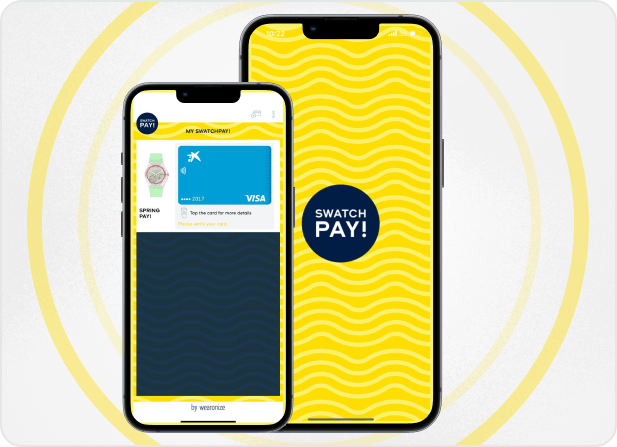
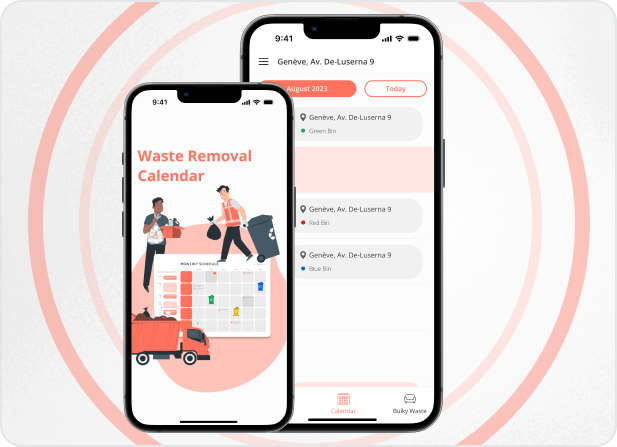
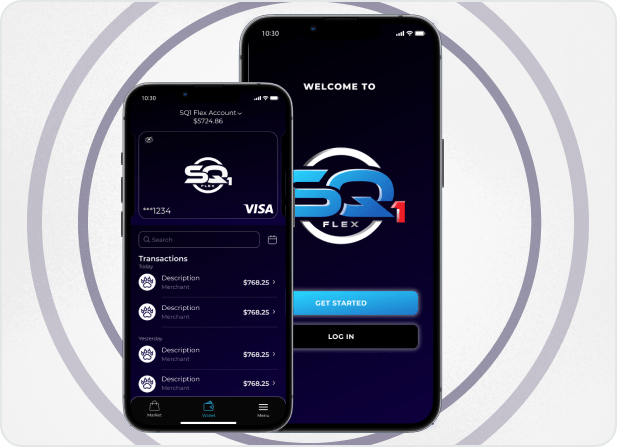
Our Success Stories


Frequently Asked Questions
A PoC is an internal project to test the technical feasibility of an idea, i.e. answer the question of ‘Can we build it?‘. An MVP is a functional product with just enough features to be released to early customers to test business hypotheses and market fit i.e. answering the questions of ‘Should we build it, will anyone use it and will they be satisfied?‘.
As an MVP development consultant, we use a collaborative process focused on your core business hypothesis. We identify the single most important problem you are solving and then define the most straightforward feature set that delivers value for that specific problem. Everything else is prioritized for future iterations.
The timeline varies by complexity, but a well-scoped MVP typically takes between 2 to 4 months. The key is the rigorous ‘Definition of Minimal and Valuable’ stage, which ensures the scope is constrained enough to be developed quickly without sacrificing the core value proposition.
Yes, we see MVP development as the first step in an ongoing partnership. We are equipped to support you through the subsequent phases of iteration, scaling and full product development based on the roadmap validated by your MVP's performance.
Contact Us
Our Team

Have questions about AI integration or development?
